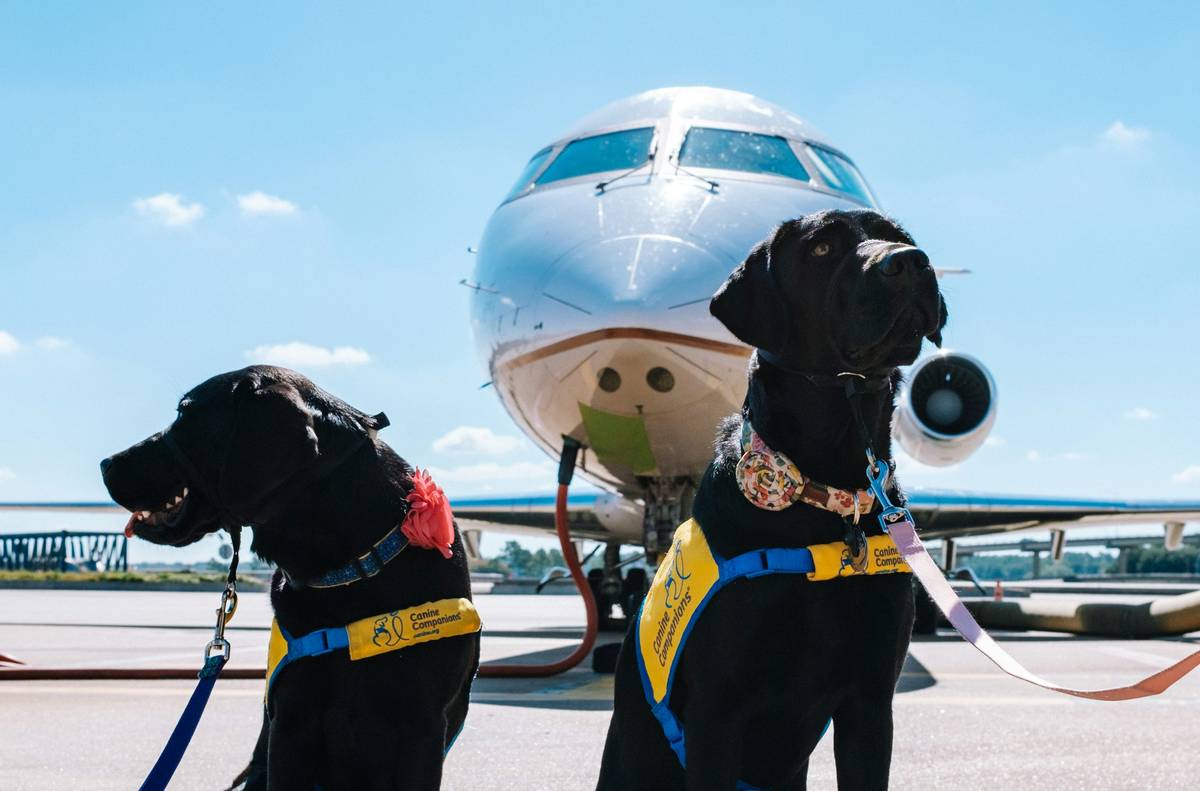
Ever felt like your emotional support dog (ESA) is treated like luggage during airline travel? You’re not alone. Thousands of pet parents struggle to understand their ESA airline rights, leaving them frustrated and confused when boarding a flight.
In this guide, you’ll uncover everything about ESA airline rights, how proper emotional support dog training can ease your travel stress, and practical steps to ensure smooth flying experiences. We’ll cover:
- The legal landscape of ESA airline rights.
- Step-by-step emotional support dog training for air travel.
- Tips to avoid common mistakes that could cost you big time at the airport.
Table of Contents
- Key Takeaways
- The Problem with ESA Airline Rights
- How to Train Your Emotional Support Dog for Air Travel
- Best Practices for ESA Owners on Flights
- Success Stories: From Chaos to Calm
- Frequently Asked Questions About ESA Airline Rights
Key Takeaways
- ESA airline rights are no longer as straightforward as they used to be—know what documentation is required.
- Proper emotional support dog training focuses on behavior, desensitization, and remaining calm in stressful environments.
- Avoid last-minute preparations; start months ahead to ensure your dog is ready for flight regulations and unexpected challenges.
The Problem with ESA Airline Rights
Remember that one time I showed up to the airport with my ESA, thinking I had all the paperwork sorted? Cue security refusing us because my “official” letter wasn’t formatted correctly. Mortifying. If you’ve been there, you know exactly what I mean.
Since January 2021, airlines have tightened rules around ESAs under U.S. Department of Transportation guidelines. Now, airlines classify ESAs differently from service animals, which means:
- No guaranteed free flights.
- Increased scrutiny of documentation.
- Potential fees or restrictions based on airline policies.

This leaves many wondering—what *do* we need to know about ESA airline rights now?
How to Train Your Emotional Support Dog for Air Travel
Optimist You: “Let’s make sure our pup loves flying!”
Grumpy You: “Yeah, but only if snacks are involved.”
Honestly, preparing your ESA for air travel isn’t rocket science, but it does take some planning. Here’s a step-by-step breakdown:
Step 1: Socialize Early and Often
Start by exposing your dog to various environments, people, and sounds. Think crowded parks, loud vacuum cleaners, and even grocery store parking lots. Why? Because planes are sensory overload—noisy engines, strangers everywhere, and tight spaces. Get them comfortable early.
Step 2: Crate Training Is Non-Negotiable
Some airlines require your ESA to remain in a carrier during the flight. Train your dog to associate the crate with positive vibes: treats, toys, and cozy blankets. Make it their happy place.
Step 3: Practice Long Car Rides
Sure, cars aren’t planes, but long car trips mimic part of the experience—confinement and unfamiliar motion. Build stamina gradually, starting with short trips and increasing duration.
Step 4: Simulate Airport Scenarios
Create mock checkpoints at home. Use cones, set timers, and practice walking through imaginary TSA lines. Teach commands like “sit,” “stay,” and “quiet” to ensure compliance in high-pressure areas.
Step 5: Focus on Desensitization
Expose your ESA to airplane-specific stimuli: ear-popping pressure changes (play videos of engine noises), seatbelts clicking, and sudden movements. Pro tip? Play noise-canceling music while practicing these scenarios.
Best Practices for ESA Owners on Flights
Here’s where things get tricky—not all advice online works. Some “tips” are downright dangerous. So buckle up—here’s what really matters:
- Document Everything: Ensure your ESA letter is current, signed by a licensed therapist, and includes specific details about your mental health condition. Generic letters won’t cut it anymore.
- Check Airline Policies: Not every airline accepts ESAs easily. Research ahead of time to avoid nasty surprises.
- Pack Essentials: Bring food, water, poop bags, and medications. No one wants to scramble mid-flight.
- Invest in Comfort Gear: A well-fitted harness or vest labeled “Emotional Support Animal” might help clarify your situation to others.
Warning:
One terrible idea floating around? Assuming your dog doesn’t need any prep because they’re already “good.” Spoiler alert—they do. Untrained dogs may misbehave, leading to denied boarding or hefty fines.
Success Stories: From Chaos to Calm
When Sarah flew with her Bernese Mountain Dog, Max, she thought disaster was inevitable. But thanks to months of ESA training and meticulous prep, both arrived safely—and stress-free—in Paris.
“I learned the hard way,” she says. “But once I got serious about learning ESA airline rights and training techniques, everything changed. Max went from anxious to zen master.”
Frequently Asked Questions About ESA Airline Rights
Do Airlines Still Recognize Emotional Support Animals?
Nope—at least not officially. Post-2021, most airlines don’t recognize ESAs as service animals. However, some still allow them under strict conditions. Always confirm before booking!
What Documents Do I Need for My ESA?
You’ll need a legitimate ESA letter from a licensed professional stating your need for an ESA. Bonus points if it mentions behavioral training specifics.
Can I Bring Food for My Dog on the Plane?
Yes, just pack it smartly! Snacks should be odorless and non-perishable to avoid complaints from fellow passengers.
Are There Size Limits for ESAs?
Technically, no. But larger breeds often face more resistance due to space constraints. Smaller dogs tend to adapt better to carriers and confined spaces.
Conclusion
Navigating ESA airline rights feels overwhelming—but armed with knowledge and proper emotional support dog training, you’ve got this. Remember:
- Understand updated ESA airline regulations.
- Train consistently for real-world scenarios.
- Prepare mentally and physically for travel day.
Your loyalty to your furry companion deserves nothing less than the best care possible—even at 35,000 feet.
Haiku for traveling souls:
Paws steady on ground,
Skyward journeys test bonds strong.
Together, always.